BENEFITS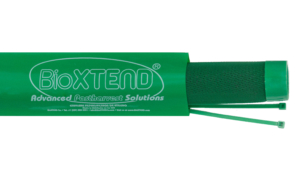
- The atmosphere is kept free of ETHYLENE ,bacteria, and fungi spores
- Shelf life is extended
- Freshness, colour and weight are maintained
- Crossed contamination and odor contents are strongly reduced.
- Mould development is contained.
- Controls ripening
- Regulates ethylene levels
- Reduces decay and waste
- Gets rid of airborne microorganisms
- Maintains fruit pressure
- Organic compliant & Approved
- Cost-effective, safe, and user-friendly
SEA TRANSPORT PROTECTION ETHYLENE FILTERS
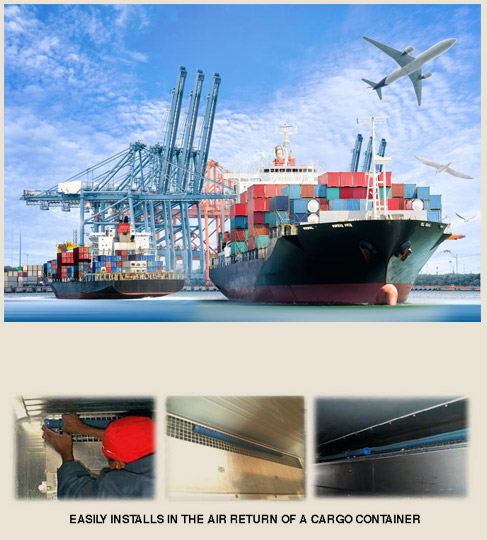
ETHYLENE CONTROL FOR SEA CONTAINER
 BioXTEND® BXT100 – cylindrical single-use ethylene control filter.
Designed to remove ethylene gas, bacteria and mold from fresh cargo in reefer containers and trailers.
The granules we use for our filter and sachet are produced in the USA under strict ISO9001:2015 registered Quality Management System. Traceability, quality checks and records are enforced at all production and assembly levels.
BXT Ethylene Filters are allowed for use with organic crops under European regulation EC 834/2007 and American Regulation NOP (National Organic Program):
BXT Ethylene control Filters contain non-invasive and non-contaminating minerals and salts. The exhausted residue produced by the absorption/oxidation of ethylene gas and other contaminants is Eco-friendly. It can be dumped with the regular trash. Alternatively, it may be used as organic fertilizer – brown residue is mostly composed of manganese dioxide.
Our high performance BXT filters are packed in cases of 9 unit. Each unit contains two zip ties per filter for easy installation into most environments and are individually wrapped in a thick & airtight plastic sleeve for long term storage.
ETHYLENE SACHET
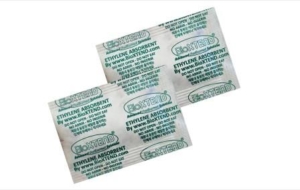 Ethylene sachets for fresh produce & floral.
MAIN BENEFITS
The atmosphere is kept free of bacteria, ethylene and fungi spores from harvest/packing to supermarket
Freshness, original color and weight of produce are maintained
shelf life is extended Mould development is contained
Close protection
Ideal combination with MAP bag packaging Technology to control the ethylene gas within produce packaging
INSTRUCTIONS OF USE
For best ethylene control , sachet is best located inside packing boxes/trays/ bags on top of the commodities
PRODUCE-FRIENDLY
Organic compliant (ECOCERT approved & OMRI Listed) Packaging material (Tyvek®) and ink are FDA Approved for Food Contact Highly Porous & 100% recyclable although Tear-, Water- & UV- Resistant The exhausted residue is environmentally friendly and may be discarded in the regular trash
SPECS
- Quality Control Label on each Bag & Case holding:
- Product Description & Quantity
- Product Reference
- Date of Manufacture
- Granule specs
ETHYLENE FILTER FOR COLD ROOM AND CONTROL ATMOSPHERE C.A STORAGE
 The ethylene filters are a flexible solution to remove large amounts of ETHYLENE produced during the LONG TERM CA AND CONVENTIONAL STORAGE OF APPLES , PEARS ,KIWI without interfering in the fruit physiology
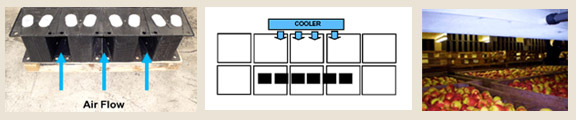
For the best Ethylene control , filters should be placed in the Air Stream The filters must be placed as shown in the picture to ensure proper air flow and efficiency
The number of V FILTER to use will depend on : variety, storage period, quantity.
ACTIVE INGREDIENT GRANULE – Potassium permanganate
HOW IT WORKS 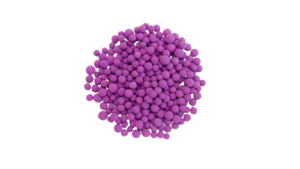
Granules are a perfect combination of extremely porous beads mixed with Potassium Permanganate (KMnO4).
3 STEPS of Air Purification:
- Physical Adsorption: particles and microorganisms are being attracted and captured inside the structure of the granule specially designed to offer a great surface of attraction
- Oxidation: Potassium Permanganate is an effective oxidizing agent of the ethylene and other primary contaminants such as Acetaldehyde, Ethanol, Sulfur compounds (H2S, SO2…) and a broad range of Volatile Organic Compounds (VOCs).
- Disinfection: Potassium Permanganate is a natural anti-microbial agent with a pH of 9.2, too high for the bacteria to survive a physical contact
- Converting the Granules into an organic fertilizer (3CH2CH2 + 12KMnO4 = 12MnO2 + 12KOH + 6CO2).